
 ● LIVE
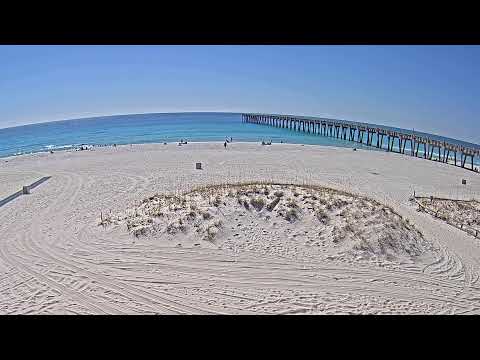
Live view from Pensacola.
Pensacola stands on the mainland beside Pensacola Bay in northwestern Florida. Its historic streets and museums belong to an urban waterfront setting, while the best-known Gulf beaches lie across the bay and Santa Rosa Sound on Santa Rosa Island. Understanding that geography turns a visit into a combination of city, harbour and barrier-island coast.
1 webcam onlineSelect a live view: the Play button opens the dedicated page for that specific camera.
● LIVE
Live view from Pensacola.
Documented visitor landmarks for Historic Pensacola Village on the mainland and Fort Pickens on Santa Rosa Island. Neither marker identifies the camera’s position.
Pensacola stands on the mainland beside Pensacola Bay in northwestern Florida. Its historic streets and museums belong to an urban waterfront setting, while the best-known Gulf beaches lie across the bay and Santa Rosa Sound on Santa Rosa Island. Understanding that geography turns a visit into a combination of city, harbour and barrier-island coast.
The beach camera introduces the coastal side of the Pensacola area. A fuller exploration connects that shore with Historic Pensacola, the museums around South Jefferson Street and Fort Pickens on the island’s western end. Each place has its own route and visitor arrangements. The map provides city and island landmarks without assigning an unsupported mounting location to the camera.
History, landscape and landmarks that help interpret what appears in the live images.
Pensacola, Gulf Breeze and Pensacola Beach are different places linked by bridges. Pensacola Bay Bridge leads towards the Gulf Breeze peninsula; Bob Sikes Bridge continues across Santa Rosa Sound to the island. A bayfront walk downtown therefore offers a different setting from a Gulf-facing beach walk. Fort Pickens is west of the main Pensacola Beach visitor area. Allow travel time between these destinations rather than interpreting their shared regional name as one continuous pedestrian neighbourhood.
In 1559, an expedition led by Tristán de Luna y Arellano arrived in Pensacola Bay to establish a Spanish colony. A hurricane and severe difficulties undermined the undertaking, which was eventually abandoned. Spanish settlement resumed in 1698 after a long interval. This distinction matters: an early colonial foundation does not mean uninterrupted urban occupation since that date. The surviving archaeological story, presented through local historical interpretation, is an opportunity to understand the people and risks behind an ambitious Gulf-coast project.
Historic Pensacola brings together houses, museums and interpretation within the area of earlier Spanish and British forts downtown. Around Seville Square, Old Christ Church offers an especially tangible landmark: completed in 1832, it later served as a library and museum as well as an Episcopal church. The Pensacola Museum of History occupies the former city hall, a Mediterranean Revival building dating from 1907. Combining a streetscape walk with its exhibits makes it easier to connect architectural layers with the larger history of the bay.
The Pensacola Museum of Art occupies a Spanish Revival building developed as the city’s permanent jail in the early twentieth century, with its planning dating to 1906. Community members organised an art association in 1954 and transformed former cells into exhibition spaces. The reuse is a distinctive part of the visit: the building’s civic past remains relevant to its cultural present. Check current exhibitions and programmes, and distinguish the art museum from the nearby history museum; their buildings and subjects tell different stories.
Completed in 1834, Fort Pickens guarded the approach to Pensacola Bay and the navy yard. Its five-sided brick design, vaulted casemates and artillery positions were shaped by coastal defence. Enslaved labourers were essential to its construction, a history that belongs alongside engineering and military interpretation. The fort remained in Union hands during the Civil War, giving it significance beyond an attractive ruin. It is now part of Gulf Islands National Seashore. Consult park information for the island road and accessible areas before setting out.
Casino Beach takes its name from a recreation complex opened in 1931, alongside the bridges that made the beach accessible by car. The original Casino offered dancing, bathing facilities, shops, food and a fishing pier; its name referred to a leisure destination rather than a modern gambling hall. Although that building was later demolished, the beach name survived. Today the area and Pensacola Beach Pier provide a central coastal reference. The historical pier and the present structure should not be assumed to be the same untouched construction.
The Gulf-facing beach and the sound-side shore are different edges of a barrier island. Sand, dunes and vegetation form a changing coastal landscape, while marked nesting areas show that the beach also serves birds and sea turtles. A walk is more revealing when attention shifts from the horizon to the transition between wet sand, upper beach and planted dunes. Keep to designated crossings and leave wildlife room. The beach’s width or a quiet-looking surface in one view does not describe conditions throughout Santa Rosa Island.
Pensacola’s naval identity extends from the harbour’s defences to aviation. The National Naval Aviation Museum presents aircraft and the history of naval flying at Naval Air Station Pensacola. It is a separate trip from the downtown museums and from Fort Pickens across the water. Because the museum is on an active installation, consult its official access instructions before travelling, including the requirements relevant to your party. Air demonstrations, when scheduled, are events with their own arrangements and should not be treated as guaranteed daily performances.
The Museum of Industry interprets Pensacola’s economic transformation, while the Museum of Commerce presents a recreated historical streetscape. Together they broaden the city’s story beyond forts and colonial dates to working life, movement and trade. Palafox Street and the surrounding downtown blocks can complement the museum circuit with shops, galleries and a meal. Allow time to look at buildings between stops rather than approaching the district only as a list of interiors. Current opening times and events should be checked individually.
The camera is associated with a Pensacola beach view. Its editorial subject is sand, wave edge and coastal horizon; the historic district and Fort Pickens are places to visit in the region, not landmarks assumed to be visible in the picture. For a balanced stay, give downtown museums and the island separate time, then combine a public beach access with a fort excursion if conditions and opening arrangements allow. Bring water and sun protection, follow posted beach flags and use authorised parking. The two mapped references are Historic Pensacola Village and Fort Pickens.
The different live views make it possible to compare districts, light, visibility and city movement at the same moment. The guide grows with the archive, keeping each webcam connected to the place it actually shows.