Dorsoduro: art, neighbourhood life and southern light
Dorsoduro offers another perspective on Venice. The district includes the Gallerie dell’Accademia, the Peggy Guggenheim Collection, Santa Maria della Salute, Punta della Dogana, Campo Santa Margherita and the Zattere waterfront. Yet it is not defined only by museums and monuments: university buildings, residential streets and small canals give it a strong local character.
What the Dorsoduro webcam shows
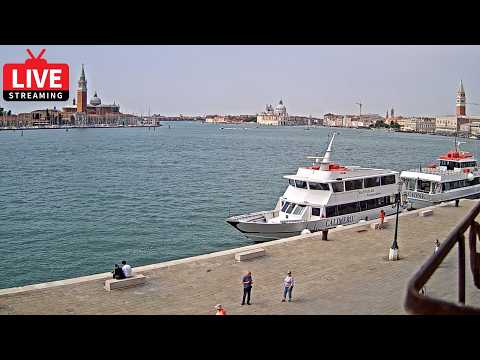
This live camera offers a view from Dorsoduro, one of the six historic sestieri of Venice and one of the best areas for understanding the city's relationship with art, water and everyday life. Unlike views focused entirely on Piazza San Marco, Dorsoduro presents a more varied urban landscape of canals, rooftops, church domes, residential buildings and open stretches toward the Giudecca Canal and St Mark's Basin.
The exact details visible depend on framing and weather, but the character of the area is clear: Dorsoduro combines monumental architecture with quieter neighbourhood life. It is a district where major museums and churches stand only a few minutes from university buildings, small workshops, residential calli and the long waterfront of the Zattere.
Why the district is called Dorsoduro
The name Dorsoduro is traditionally linked to the comparatively firm and elevated ground on which part of the district developed. In a city built on islands, mudflats and reclaimed land, the presence of a more solid 'hard ridge' helped give the area a distinct identity.
Today the sestiere stretches from the Accademia area toward Punta della Dogana and includes some of Venice's most important cultural sites. It also contains Campo Santa Margherita, one of the liveliest local squares, and the Zattere, a long waterfront facing the Giudecca.
From the Accademia to Punta della Dogana
The Gallerie dell'Accademia preserve one of the world's major collections of Venetian painting and stand close to the Accademia Bridge over the Grand Canal. Nearby, the Peggy Guggenheim Collection occupies Palazzo Venier dei Leoni and brings twentieth-century art into a district already dense with older churches and palaces.
At the eastern tip of Dorsoduro, Punta della Dogana divides the Grand Canal from the Giudecca Canal. The former maritime customs building, completed in the seventeenth century, now hosts contemporary art exhibitions. Beside it rises Santa Maria della Salute, the great Baroque church designed by Baldassarre Longhena after the plague of 1630.
This sequence of places explains why Dorsoduro is often described as Venice's art district: within a relatively short walk, the visitor moves from Renaissance and Baroque architecture to modern and contemporary art.
What to watch in the live view
Dorsoduro is especially sensitive to light. The wide southern exposure along the Zattere and the open water toward the Giudecca allow sunlight to enter the district differently from the narrowest parts of central Venice. Bright winter days, summer haze and low evening light can make the same rooftops and façades look completely different.
Weather is equally important. Clouds arriving from the lagoon, mist over the water and rain on terracotta roofs change the atmosphere quickly. When visibility is high, the relationship between the district and the wider lagoon becomes much easier to read.
Places to explore nearby
When to watch this webcam
This camera is especially rewarding in changing light: early morning, late afternoon and after rain. It is also useful for comparing visibility across the lagoon and for seeing how a residential district of Venice changes between quiet hours and the busier middle of the day.
What to watch live
Look at the balance between rooftops, canals and open lagoon light, then compare how visibility, clouds and the angle of the sun change the character of Dorsoduro.