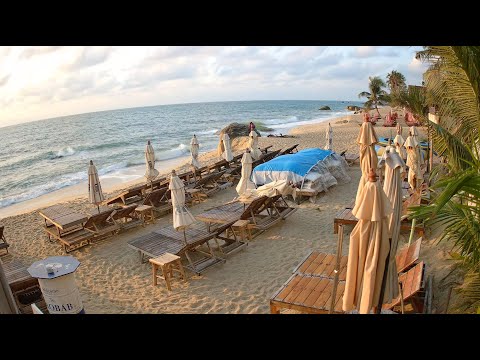
Ko Samui - Banyan Food Market live
The Banyan Food Market webcam shifts attention away from beaches and into Samui's contemporary food scene. Several food businesses gather around a large banyan tree, and the atmosphere changes between breakfast, daytime, evening and events.
Coconuts, food and markets
Coconut cultivation is part of Samui's economic history and tropical landscape. Local food combines seafood, fruit, southern Thai cooking and an international restaurant scene that expanded with tourism.
Banyan Food Market represents this contemporary side: several food businesses gathered around a large banyan tree with events and social spaces. Its webcam adds a different dimension to the island story beyond beaches.
Chaweng: the island's most dynamic area
Chaweng is one of Samui's best-known beach areas and concentrates a large share of hotels, restaurants, shopping and nightlife. Its long white beach is backed by a much denser urban strip than in many other parts of the island.
The Chaweng webcams focus strongly on street life: Soi Green Mango, bars, roads and evening activity. They become especially revealing when compared between afternoon, evening and late night as lighting, traffic and pedestrian movement change.
From fishing communities to an international destination
For much of its history Samui depended on fishing, coconut cultivation and regional sea links. Coastal communities grew around small harbours and villages, while the interior retained an agricultural landscape.
Tourism transformed the island, particularly around Chaweng, Lamai and Bo Phut. Hotels, restaurants, markets, nightlife and services grew alongside older activities. Live webcams reveal the overlap between tropical landscape and contemporary resort life.
Temples and island culture
Ko Samui is not only a beach destination. Temples and religious sites reflect Buddhist culture and the history of local communities. The Big Buddha area in the north-east is one of the island's best-known reference points.
Even when temples are outside the webcam frame, they matter to the surrounding landscape. Bangrak, Bo Phut and Chaweng are not simply tourist zones but parts of an island community with active markets, traditions and religious places.
An island in the Gulf of Thailand
Ko Samui lies off the coast of Surat Thani in the Gulf of Thailand. Ferries and flights connect the island with the mainland and other destinations, while a ring road links the main coastal communities. Despite international tourism, different beaches and districts still retain very distinct characters.
Chaweng and Lamai dominate the east coast; Bo Phut, Bangrak and Big Buddha are in the north-east; Nathon on the west has long been associated with mainland connections. This geography explains why nearby webcams can show different wind, sea and crowd conditions.
How to read Ko Samui through its webcams
The twelve streams work best together. Chaweng shows the urban and nightlife side; Bo Phut combines fishing-village memory with tourism; Bangrak shows sea and transport; Lamai a more relaxed east-coast environment; Banyan Food Market the island's contemporary food and social scene.
During the day, watch sea conditions, cloud, shadows and beach use; toward sunset the light changes; at night restaurants, markets, signs and pedestrians take over. Samui becomes a living island rather than a tropical postcard.
What this live view reveals
The Banyan Food Market webcam shifts attention away from beaches and into Samui's contemporary food scene. Several food businesses gather around a large banyan tree, and the atmosphere changes between breakfast, daytime, evening and events.
What to watch live
Watch sea or traffic depending on the view, plus light, wind, cloud, crowd levels and changes between day and evening.