Laguna Beach, Florida: a residential shore with a history of keeping the beach open
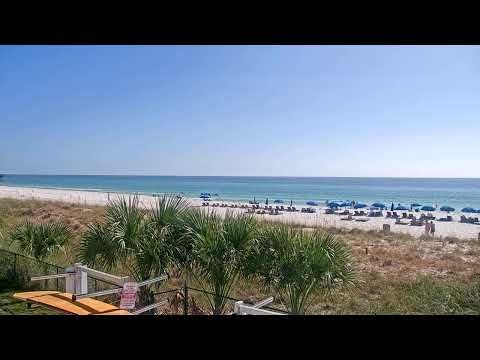
Laguna Beach here is the Florida community on the western side of the wider Panama City Beach destination. It is not the Californian arts town of the same name. Its importance is the different rhythm it brings to the coast: a setting associated with homes, smaller holiday properties and a more residential landscape than the central concentration of tall resort buildings. Quietness is not absolute, and visitor numbers vary by season, but the contrast in development helps explain why many people distinguish the West End from the better-known central beachfront. A coastal view gives a starting point for understanding that distinction.
The western beach, not the Californian city
Laguna Beach here is the Florida community on the western side of the wider Panama City Beach destination. It is not the Californian arts town of the same name. Its importance is the different rhythm it brings to the coast: a setting associated with homes, smaller holiday properties and a more residential landscape than the central concentration of tall resort buildings. Quietness is not absolute, and visitor numbers vary by season, but the contrast in development helps explain why many people distinguish the West End from the better-known central beachfront. A coastal view gives a starting point for understanding that distinction.
A community formed around a particular coastline
The local property owners’ association traces Laguna Beach’s development to Broderick Lahan’s work in the 1930s. Its historical account describes holiday accommodation, a grocery business and social meeting places developing alongside residential plots. That story is more informative than imagining the area as untouched land suddenly discovered by modern visitors. Laguna Beach was shaped by the interaction of people wanting a seaside retreat and people building a community that could support everyday stays. The road, beach-facing plots and services behind the shore became part of the character of the place, even as nearby stretches moved towards larger developments.
Why the open shore matters here
The same local history describes a long community campaign over land labelled “beach reserved” on subdivision plans. Rather than treating that phrase as a current legal guide, it is useful to understand the landscape question behind it: would the seaward side be built over, or would an open relationship between neighbourhood and beach remain? The history helps explain the value placed locally on an unobstructed coastal strip. It does not mean every footpath or parcel is open to everyone. For a visit today, follow signed public access and current local information rather than drawing access rights from an attractive view or an old map.
Reading a sandy coast rather than a resort skyline
The beach itself belongs to the pale quartz-sand coast of the Florida Panhandle. An open horizon and changing water colour can be visually striking without any large monument in the frame. The wet sand near the waves, dry upper beach and dune vegetation describe different parts of a coastal system, not empty space awaiting development. Where dunes survive, their plants help retain sand and create a transition between exposed shore and land behind it. Crossing at a designated route protects that structure. Looking at a quiet scene also calls for patience: differences in wave spacing, reflected light and the shoreline’s shape often matter more than conspicuous activity.
Lake Powell and Camp Helen as nearby excursions
Towards the western end of the broader destination, Camp Helen State Park combines historic buildings with a coastal dune lake and Gulf beach. Lake Powell is a different environment from the open water beside Laguna Beach. Its shoreline, vegetation and connection to the surrounding landscape make a lake visit worthwhile in its own right. Camp Helen’s Lodge and Rainbow Cottages add a human story: the property served workers of Alabama’s Avondale Mills as a holiday retreat before becoming a state park. These places enrich a western-coast itinerary, but should not be described as landmarks established within this camera’s frame.
Everyday coastal life and independent exploration
The West End rewards a less compressed itinerary than a checklist of major attractions. A beach walk, a stop for supplies or a meal and time around a nearby park can reveal how a residential holiday coast works. Do not assume that a business mentioned in an old community history remains open or has the same name today. For a cultural contrast, Man in the Sea Museum introduces underwater exploration and the SEALAB programme in the wider western area. It offers a way to connect the sea on the horizon with the region’s scientific and diving history, especially when the weather favours an indoor visit.
A visit that respects the neighbourhood
Plan parking and beach access before arriving, particularly when staying elsewhere along the coast. Keep private drives clear and recognise that residential streets are also people’s home environment. Bring back litter and leave dune vegetation undisturbed; the very openness that attracts visitors is part of a landscape maintained through care. Summer thunderstorms, heat and changing surf can alter a day’s plans, so consult current local guidance rather than relying on the appearance of the sea alone. Laguna Beach is most rewarding when approached as a place with a community and a history, not simply a less crowded substitute for another beach.